A great mannequin clothing display is so much more than a plastic hanger. Think of it as your brand's silent salesperson, working around the clock to tell a story, grab a customer's attention, and ultimately, turn a casual browser into a committed buyer.
Whether it’s the centerpiece of your boutique or the hero shot in your e-commerce gallery, a well-styled mannequin is one of the most powerful sales tools you have.
Why a Great Mannequin Display Is Your Secret Weapon
In a fashion market this crowded, that first visual impression is everything. Your mannequin display is how you cut through the noise, whether you’re trying to draw a shopper into your store or just stop someone from scrolling past your new collection online.
It’s the critical bridge between a garment hanging lifelessly on a rack and a customer being able to picture it in their own life.
This isn’t just about making things look pretty—it’s about strategic visual communication. A luxury brand might use a sleek, abstract mannequin to create an air of exclusivity. An online boutique, on the other hand, could use realistic, dynamic poses to help shoppers see exactly how a dress will fit, move, and feel in the real world. The goal is to make the customer feel a connection.
The Real-World Impact on Your Bottom Line
Investing in quality mannequin displays isn't an expense; it's a direct investment in your sales. It’s a cornerstone of visual merchandising for a good reason, fueling a market expected to hit a staggering $5.6 billion by 2032.
The data backs this up. The numbers we see in the industry show that strategic visual displays can increase foot traffic by as much as 25% and boost conversions by 10%. That’s a clear return on the effort.
To give you a clearer picture, here’s a breakdown of how effective displays can move the needle on key business metrics.
How Mannequin Displays Influence Key Retail Metrics
| Metric | Average Uplift |
|---|---|
| In-Store Foot Traffic | Up to 25% |
| Online Conversion Rate | 10-15% |
| Average Order Value | 5-10% |
| Product Page Engagement | Up to 30% |
As you can see, the benefits are tangible, impacting everything from initial interest to the final sale. A great display doesn't just attract eyes; it opens wallets.
This principle translates directly to the digital shelf, too. In e-commerce, your images are your product, and a well-photographed mannequin can make all the difference.
The real job of a mannequin isn't just to show off an item. It's to sell a complete look, a feeling, and a lifestyle. It turns a product into something your customer absolutely has to own.
Building Your Brand’s Visual Story
Every mannequin you use is a character in your brand's ongoing story. Is your brand playful and trendy? Classic and sophisticated? Edgy and avant-garde? The type of mannequin, its pose, and the styling all work together to build this narrative.
- Create Aspiration: You're not just selling a dress; you're selling the confidence and style that comes with it. Show customers the person they aspire to be.
- Demonstrate Fit and Form: Help shoppers understand how the garment actually looks and drapes on a human-like form. This removes guesswork and builds buying confidence.
- Reinforce Brand Identity: Consistency is key. Every display, from its lighting to its pose, should feel like it comes from your brand.
By mastering your mannequin clothing displays, you're building a powerful and consistent brand experience that doesn't just look professional—it actively drives sales. The quality of your presentation is directly linked to how customers perceive your products, making excellent images for e-commerce an absolute necessity.
Selecting a Mannequin That Embodies Your Brand
Think of your mannequin as your brand’s silent salesperson. It’s not just a hanger for your clothes; it’s the first thing a customer connects with, telling a story about who your brand is and who it's for. Getting this choice right is the first, and arguably most important, step in creating a display that actually sells.
Your mannequin choice sets the entire mood. It’s the difference between a shopper thinking, “That’s a nice shirt,” and, “I would look great in that shirt.”
Matching Mannequin Type to Brand Identity
The first big decision is style: realistic, abstract, or headless? Each one sends a completely different message.
Realistic mannequins, with their detailed faces and lifelike poses, are masters of storytelling. They’re perfect for helping customers picture themselves in a specific scenario—whether that’s a luxury gala or a casual weekend brunch. They transform an outfit into a lifestyle.
On the flip side, you have abstract mannequins. Their minimal features and artistic forms are designed to make the clothing the undisputed hero. All the focus goes straight to the fabric, cut, and design. This is why you see them so often in high-fashion boutiques and avant-garde collections where the garment itself is the work of art.
Headless mannequins strike a fantastic balance. By removing the face, you sidestep giving the display a specific personality that might not resonate with everyone. This makes it incredibly easy for a wider range of shoppers to project themselves onto the look, making them a go-to for many e-commerce and retail brands.
And let's not forget one of the most important shifts in recent years: body positivity. Using plus-size or varied-shape mannequins isn't just a trend; it's a powerful way to show your audience you see them and celebrate them. That kind of validation builds incredible brand loyalty.
The path is clear: a strategic approach to your displays directly fuels conversions. Ignoring it is simply leaving money on the table.
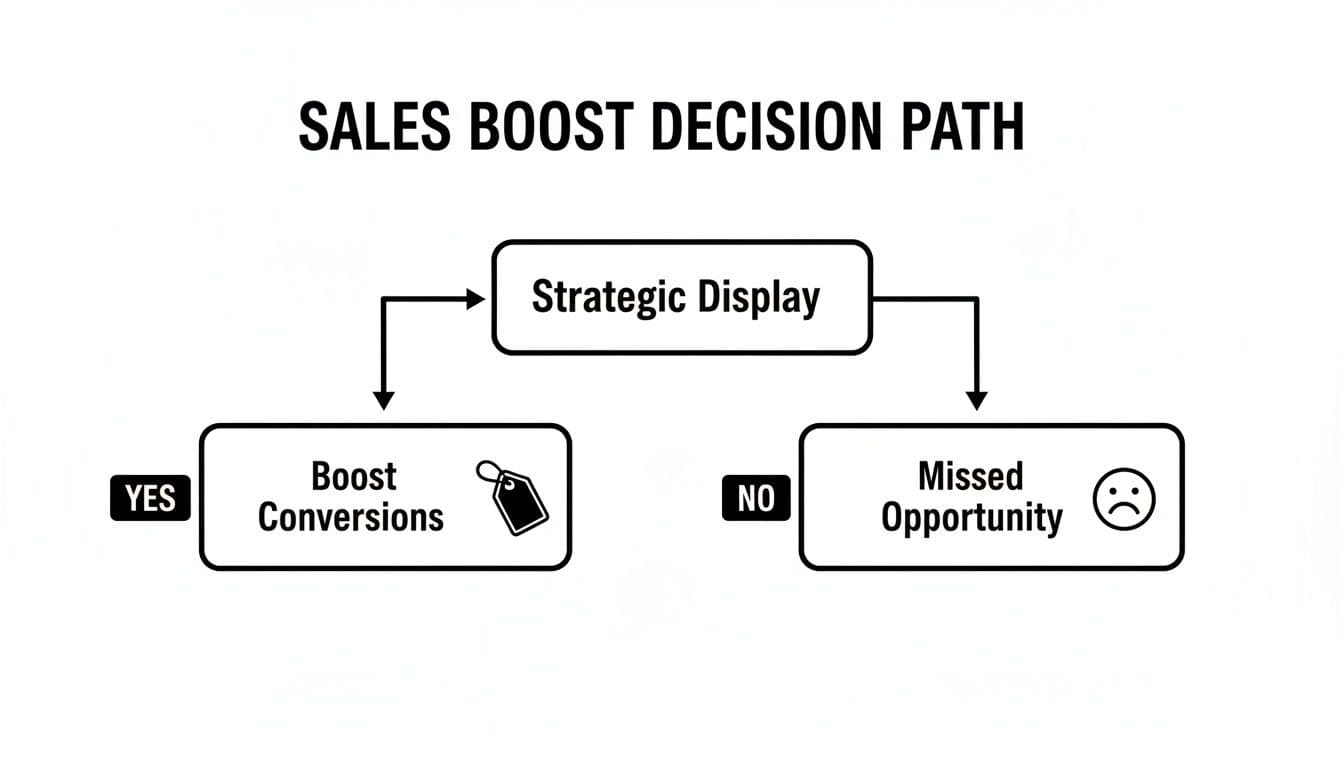
Decision path diagram showing that strategic display leads to boosting conversions, while not doing so results in a missed opportunity.
To help you visualize the options, here’s a quick breakdown of the most common mannequin types and where they shine.
Mannequin Type Comparison for Fashion Brands
| Mannequin Type | Best For | Pros | Cons |
|---|---|---|---|
| Realistic | Lifestyle brands, luxury retail, storytelling displays | Creates strong emotional connection; helps customers visualize themselves | Can have a strong, specific look that may not appeal to all shoppers; can look dated if not chosen carefully |
| Abstract | High-fashion, avant-garde, minimalist brands | Puts 100% focus on the garment; modern and artistic feel | Lacks a personal connection; can feel cold or unapproachable to some audiences |
| Headless | E-commerce, mass-market retail, brands with a broad audience | Versatile and inclusive; won't clash with the brand's aesthetic; allows shoppers to project themselves | Can feel generic if not styled well; less personality than realistic models |
| Plus-Size/Diverse | Inclusive brands, everyday wear, direct-to-consumer | Builds brand loyalty by reflecting real customer bodies; promotes positive messaging | May require sourcing from specialized suppliers; still a smaller segment of the market |
Ultimately, the best mannequin is the one that feels like a natural extension of your brand's personality and speaks directly to your ideal customer.
Material and Market Considerations
Beyond the look, the physical material matters, too. The global market for clothing display mannequins was valued at over $6 billion in 2024, and the industry heavyweight is fiberglass. Major fashion houses love fiberglass for its sleek finish and durability. It’s a solid, long-term investment. For a deeper dive, you can review the full market research on industry trends.
But durability isn't the only story. Eco-conscious brands are increasingly turning to sustainable options like recyclable plastics or even papier-mâché. They might not last as long as fiberglass, but they perfectly align with a brand that puts environmental responsibility at its core.
When making your final choice, run through this quick checklist:
- Clothing Style: Are you selling activewear that needs a dynamic pose, or structured formalwear that requires an elegant, static form?
- Brand Narrative: Is your brand exclusive and aspirational, or accessible and community-driven? Your mannequin is a key character in that story.
- Ease of Use: Don't forget the practical side. Your team will be dressing and undressing these forms constantly. Heavy or awkwardly posed mannequins can seriously slow down your workflow.
Remember, your mannequin isn’t just a prop. It's the physical representation of your target customer. If your customer can’t see themselves in your display, you’ve already lost a potential sale.
The right mannequin closes the gap between browsing and buying by silently convincing shoppers that your collection was made just for them.
Expert Styling Techniques for a Flawless Presentation
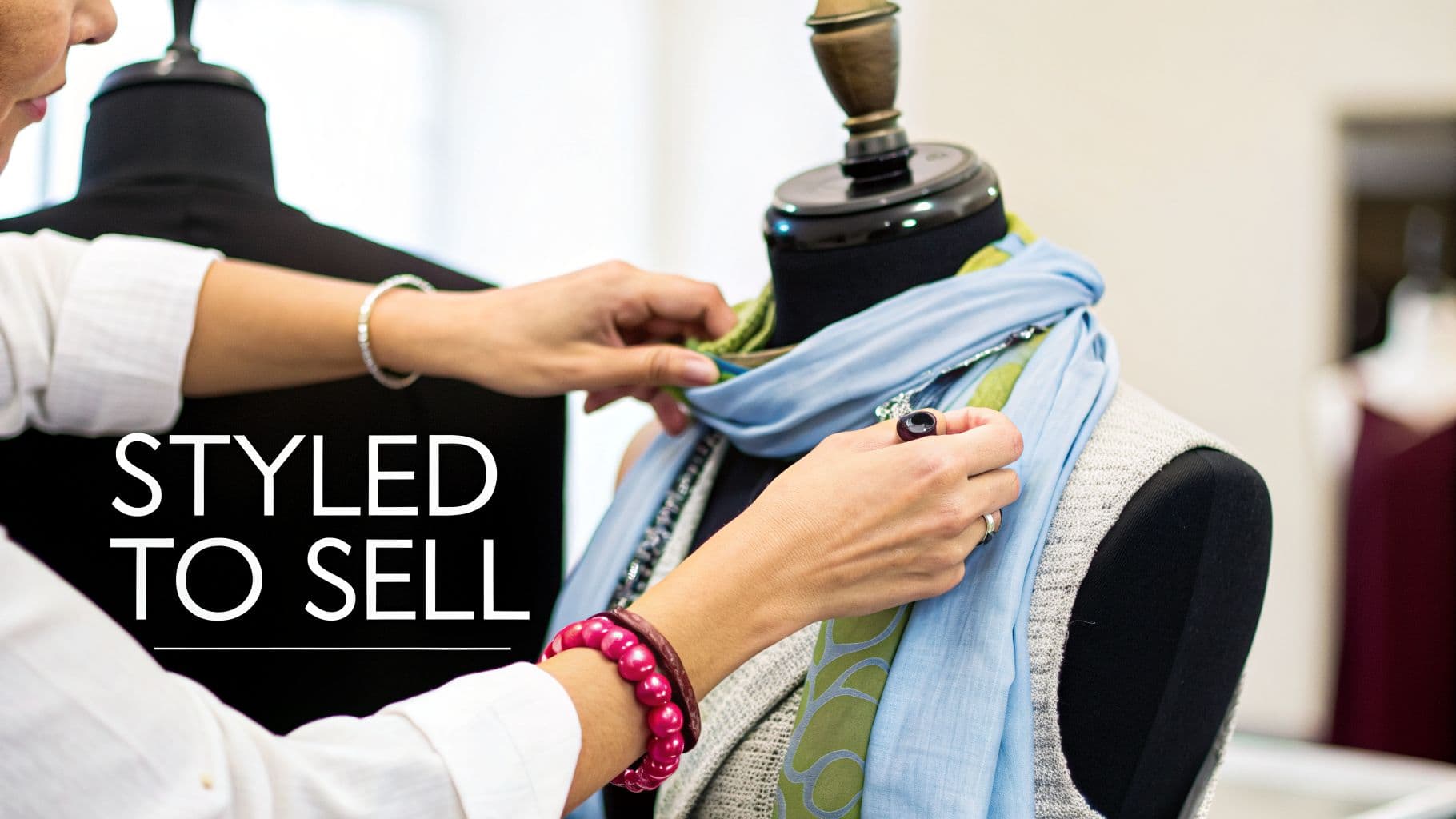
Close-up of hands styling a blue scarf and necklace on a mannequin, with "STYLED TO SELL" text.
This is where the real work—and the real magic—begins. A plain mannequin just holds clothes; a styled mannequin sells them. Styling is what turns a simple garment into a must-have look, helping customers instantly see themselves wearing it.
Your mission here isn't just to dress the form. It's to make the clothing look even better than it would on a hanger, creating a polished, aspirational image that stops people in their tracks.
Prepping Garments for a Perfect Fit
First things first: no garment should ever go on a mannequin straight out of the box. Wrinkles, stray threads, and dust are the fastest way to make a product look cheap and unprofessional.
Grab a good quality steamer. It's far better than an iron for this job, as it’s gentle on delicate fabrics and can quickly release creases from tricky spots like sleeves and collars. I always focus on the areas that get compressed during shipping—those are the first imperfections a customer’s eye will catch.
Before you even think about dressing the form, run through a quick quality check:
- Loose Threads: Snip every last one with a small pair of scissors. Don't pull them!
- Dust or Lint: A quick once-over with a lint roller makes the fabric look crisp and new.
- Sizing Tags: Make sure they're tucked away or temporarily removed. A distracting tag can ruin a perfect shot.
The secret to a high-end mannequin clothing display is starting with a pristine canvas. Every minute you spend on preparation saves you from losing a sale due to a sloppy first impression.
Creating Shape and Movement with Pins and Clips
Most clothing is designed to fit a variety of human shapes, but your mannequin has one fixed form. This is where a stylist’s toolkit of pins and clips comes into play. You’re aiming to tailor the garment to the mannequin's body, creating a flawless silhouette without bunching or damaging the fabric.
Working on the back of the mannequin (out of the camera’s view), use small, sharp pins or dedicated styling clips along the seams. This allows you to pull the fabric taut across the front, getting rid of any bagginess and highlighting the item's intended fit. This step is non-negotiable for e-commerce photography.
Next, you want to add a little life and personality. Static, perfectly flat clothing feels unnatural. Try these simple tricks:
- The Effortless Cuff: Rolling up sleeves gives off a relaxed, lived-in vibe. A sharp cuff on a shirt signals professionalism, while a looser roll on a sweater feels more casual.
- The Intentional Collar Pop: A slightly turned-up collar on a jacket or polo adds a hint of attitude and draws the eye up toward the neckline.
- The Perfect Drape: When working with scarves, wraps, or open cardigans, don't just let them hang. Artfully drape the fabric to create soft, inviting folds that show off the texture and suggest movement.
This hands-on styling is crucial for great photography, and it also sets you up for success with more advanced digital techniques. A well-styled product photo is the perfect source material for creating a ghost mannequin effect, where the form is digitally removed to give the clothing a 3D, hollow-body look.
Building a Compelling Outfit Story
Why show one piece when you can sell an entire outfit? Layering is one of the most effective strategies in a stylist's playbook. It does more than just show off multiple products; it tells a story and inspires customers by showing them exactly how to put a look together.
When building an outfit, focus on creating a pleasing balance of texture, color, and proportion. For example, pairing a chunky knit sweater with some sleek faux-leather leggings creates a fantastic textural contrast. You can take a simple t-shirt dress to the next level by adding a belt to define the waist and a statement necklace to draw attention. Every piece should work together to build a look that your target customer can’t wait to replicate.
4. Perfecting Your Lighting and E-Commerce Photography
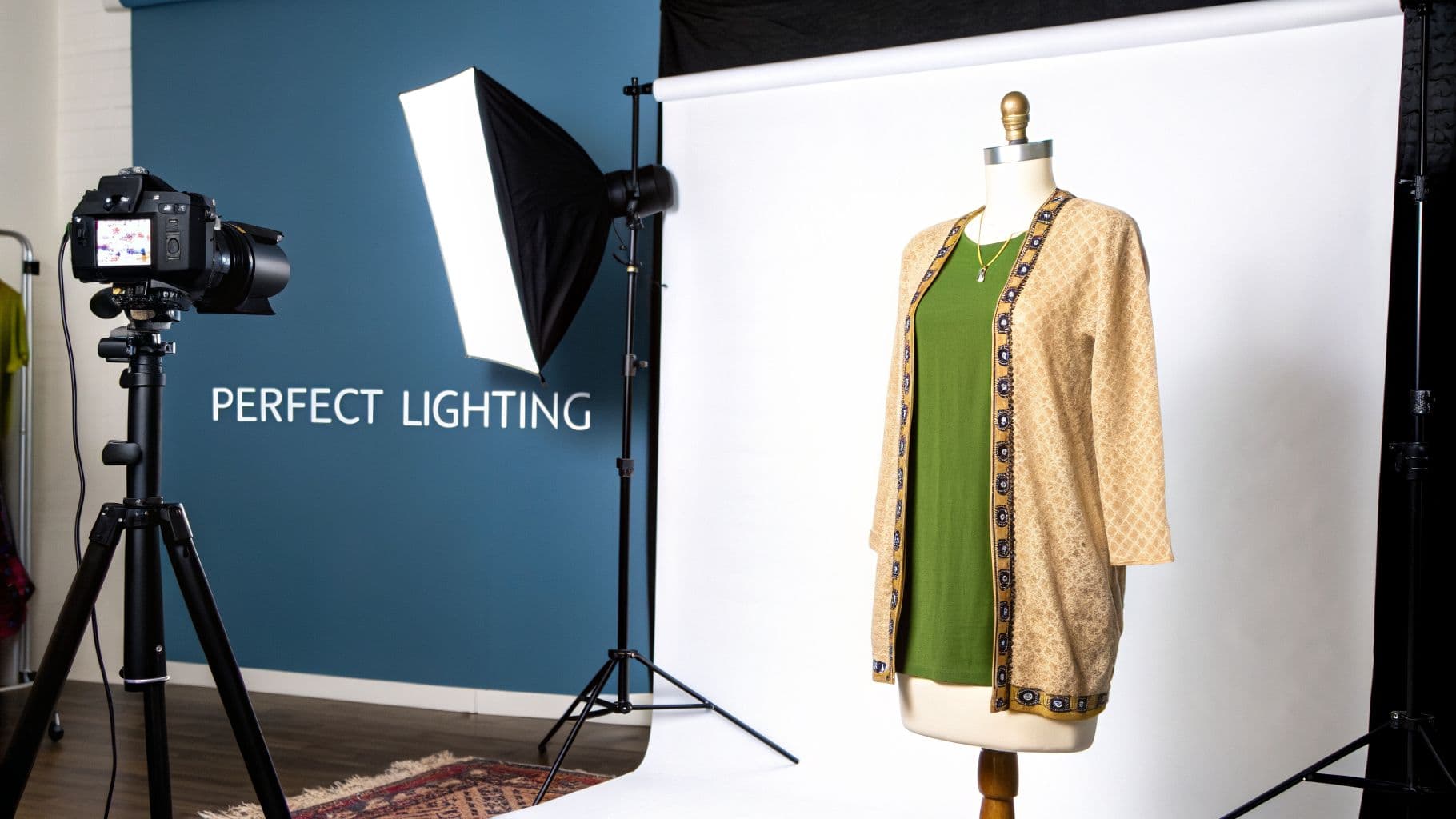
A professional photography studio with a camera on a tripod, softbox light, and a mannequin displaying a green top and patterned cardigan against a white backdrop.
You’ve steamed, pinned, and styled the outfit to perfection. Now comes the moment of truth: capturing it for your online store. Your product photos are everything in e-commerce. They're the only way a customer can truly get a feel for the garment’s fit, texture, and color before they click "add to cart."
Great lighting is what separates an amateur shot from a professional one. It’s what makes the fabric look rich, brings out the true color, and eliminates shadows that hide important details. Without it, even the most beautifully styled piece will look flat and unappealing online.
Finding the Right Light for Your Budget
Don't assume you need a Hollywood-level budget for good lighting. It's all about learning to control and shape the light you have.
If you're just starting out, natural light is your best friend—and it's free. Try positioning your mannequin near a large window on a slightly overcast day. This gives you soft, diffused light that wraps around the garment and minimizes harsh shadows. The one thing to avoid is direct, blasting sunlight; it will wash out colors and create distracting glare.
When you're ready to level up, investing in a basic lighting kit will completely change your game. A simple, effective setup only needs a few key pieces:
- A Key Light: This is your main light. A softbox placed at a 45-degree angle to your mannequin works perfectly to light up the front of the clothing.
- A Fill Light: Set this up on the opposite side of the key light. Its job is to soften any shadows created by the main light, giving you a clean, even look.
- A Reflector: It doesn't get simpler than this. A cheap white foam board can bounce light back into darker areas, brightening them up without needing another power source.
Your goal with lighting is to reveal detail, not hide it. A great setup makes textures pop and gives the clothing a tangible, three-dimensional feel. That’s what builds the confidence a customer needs to make a purchase.
Composing Shots That Convert
Once your lighting is dialed in, the way you frame your shots is what will guide your customer's eye and tell the story of the product. Never settle for just one photo. You need a gallery of images that answers every question a shopper might have.
Put yourself in their shoes. What do you look for when shopping online?
- The Full-Length Shot: This is your hero image. It needs to clearly show the entire outfit on the mannequin to give customers a sense of the overall silhouette and how it hangs.
- The Detail Shot: Get in close. Zoom in on the things that make the garment special—intricate embroidery, unique buttons, or the specific weave of the fabric. This is how you show quality and justify your price point.
- The Back and Side Views: No one buys clothes without knowing what the back looks like. A 3/4 view is often much more dynamic and flattering than a straight-on side profile, as it shows more dimension.
This attention to detail is non-negotiable for selling online. We know that in-store mannequin displays can lift sales by as much as 18%, but getting that same lift online is a different beast. With photoshoot costs easily exceeding $2,000 per look, your photography has to be incredibly efficient and effective. As highlighted in recent mannequin market research, these images aren't just an expense—they're a primary driver of your e-commerce revenue.
Beyond the Physical: Exploring AI Models and Virtual Displays
Getting your mannequin shots just right is a huge part of the game. But what if you could skip the studio, the lights, and even the mannequin itself? That's where the next wave of fashion e-commerce is heading. Let's be real—traditional photoshoots are expensive, slow, and a logistical nightmare. That's why so many brands are now turning to AI to create their product shots.
This isn't about replacing photographers entirely. It's about giving brands a faster, smarter way to generate high-quality images for their online stores. We're talking about sophisticated AI platforms that can generate stunning, lifelike model imagery without a camera crew in sight.
How AI-Powered Visuals Actually Work
The concept sounds futuristic, but the process is surprisingly straightforward. Imagine you have a new shirt you need to get online, fast. Instead of booking a full shoot, you just take a simple photo of the garment. It could be on a hanger, or even just laid out flat.
From there, the workflow is simple:
- You upload that single garment photo.
- You pick an AI-generated model from a huge library that fits your brand’s vibe and target customer.
- The AI gets to work, digitally "dressing" the model with your garment to create a whole set of photorealistic images.
This completely changes the game. Suddenly, you can create a virtually endless stream of on-model photography on demand. For smaller boutiques or vintage resellers, this is huge. It gives them the power to produce visuals that compete with the big-name retailers, all at a fraction of the cost.
Take a look at this. It's a perfect example of how a simple flat-lay t-shirt photo gets turned into a professional on-model shot, ready for any product page.
You can see how the AI doesn't just paste the shirt on; it understands the fit, drape, and texture to create something that looks completely real.
The Payoff is Huge—And It's Not Just About Money
The most obvious win here is the cost. Brands that have made the switch are reporting savings of up to 90% compared to what they used to spend on photoshoots. But the real competitive edge comes from speed.
Think about it: you can get new arrivals listed online the very same day they come in. By generating visuals in seconds, you eliminate the weeks of lag time that shoots, editing, and approvals used to create.
There's another massive advantage: true inclusivity. With a library of ai generated models, you can instantly show your collection on a diverse range of ethnicities, ages, and body types. You're no longer limited by the models you can book for a single day's shoot. Every customer can see someone who looks like them wearing your clothes.
As you dive deeper, you’ll find that the technology is getting more advanced, with things like AI image to 3D model conversion becoming more common for creating hyper-realistic digital assets. This isn't just a trend; it's quickly becoming a fundamental tool for modern fashion brands.
Common Questions About Mannequin Displays
As you get deeper into visual merchandising, a few common questions always seem to pop up. Perfecting a mannequin display is part art, part science, and even the most experienced retailers run into challenges. Let's tackle some of the questions we hear most often.
How Often Should I Update My Mannequin Displays?
The quick answer? Often. Your displays should never feel stale.
For a physical storefront, a good rule of thumb is to refresh your main window displays at least once a month. Inside the store, aim to update the mannequins every 2-4 weeks. This simple practice keeps your space looking fresh and gives loyal customers a reason to see what’s new every time they visit.
For e-commerce, the pace is even faster. Your product pages and social media feeds are your displays. You should be constantly cycling in new looks and arrangements, especially to coincide with:
- New Arrivals: Get new inventory in front of shoppers immediately to capture that initial launch excitement.
- Seasonal Changes: Your looks should always reflect the current weather, upcoming holidays, or major seasonal trends.
- Marketing Campaigns: Make sure your visual merchandising is in lockstep with your email blasts and social media promotions for a cohesive message.
Is There a More Immersive Way to Display Clothes Online?
Absolutely. High-quality photos are the baseline, but forward-thinking brands are looking for ways to bridge the gap between seeing a garment online and truly understanding how it fits and feels.
The goal is to create a more tangible experience. For example, some brands are using augmented reality for e-commerce, which allows a customer to virtually place a model or mannequin right in their own room. This helps them instantly visualize the scale and style in a familiar context, which builds the confidence needed to click "buy" and ultimately reduces returns.
A static image shows the product, but an interactive experience sells it. The closer you can get a customer to "feeling" the item, the higher your conversion rate will be.
What Is the Best Way to Clean and Maintain Mannequins?
Proper care is non-negotiable. It extends the life of your mannequins and ensures your clothes always look their best. Dust, smudges, and scuffs can make even a luxury garment look cheap, so a regular cleaning routine is essential.
Fiberglass & Plastic Mannequins
These are durable, but they still need some love.
- Dust Weekly: A quick wipe-down with a soft microfiber cloth or a feather duster is usually all you need to keep them looking sharp.
- Tackle Smudges and Stains: For fingerprints or makeup, a soft cloth with a bit of mild soap (like dish soap) and warm water works wonders. We've also had great luck using magic erasers on stubborn scuff marks—just be sure to test it on a hidden spot first.
- Stay Away from Harsh Chemicals: Never use abrasive cleaners or solvents. They can easily strip the finish and ruin the surface.
Fabric-Covered Forms
Fabric forms require a slightly different touch.
- A lint roller is your best friend here. The brush attachment on a vacuum also works great for removing dust and loose threads.
- For stains, reach for an upholstery or fabric cleaner. As always, test it on an inconspicuous area (like the base or underside) to make sure it doesn't cause any discoloration.
Ready to create stunning, on-model fashion imagery without the cost and hassle of traditional photoshoots? WearView uses AI to transform your garment photos into studio-quality visuals in seconds. See how WearView can elevate your brand today.
Tags:
WearView Team
WearView Content & Research Team
WearView Team is a group of fashion technology specialists focused on AI fashion models, virtual try-on, and AI product photography for e-commerce brands. We publish in-depth guides, case studies, and practical insights to help fashion businesses improve conversion rates and scale faster using AI.